Independent — not funded by the brands it rates. Auto-linked to this product, not yet human-reviewed. Checked this week. We started showing this score on Sep 11, 2026. about this rater →
Coverage & match quality
5 ratings · 2 of 4 axes
Some ratings rest on an automatic match that has not been human-reviewed.
Fewer raters reach smaller-brand products, so a missing rating is not a clean bill of health, only a gap.
Weighted by what you care about
Tune your weights
composite recomputes live
+
1.0×
Environmentalno rating
No rater covers this axis for this product, so its weight can't move the score.
Laborno rating
No rater covers this axis for this product, so its weight can't move the score.
1.0×
0 means ignored. Higher = more weight in your composite.
What we know about the packaging
Unidentified·0 of 1 identified
Nobody recorded what this pack is actually made of beyond “plastic”, so the packaging score is a stand-in for the middle of that range — not a reading of this container.
Recorded only as “plastic” — no resin code. It could be PET (#1) (widely recyclable) or PVC (#3) (hard to recycle); nothing on record says which, so it counts as 46 out of 100, the middle of that range.
This says how precisely the packaging is described, not how good it is — a fully identified material can still be a bad one.
How we know the packaging
Read from the product photo, not declared by the maker — treat this score as weaker.
The container looks like this, rather than the maker saying so. A photo also cannot show the resin code moulded into the base, so every plastic container reads as “plastic, unspecified” — the cautious end of the plastics range, not a finding about this particular pack.
Ingredients, decoded
Data availability
Good·34 of 50 characterized
Our sources have reference data on 34 of 50 listed ingredients; 16 are uncharacterized in our data — a gap, not a clean bill.
Where this came from
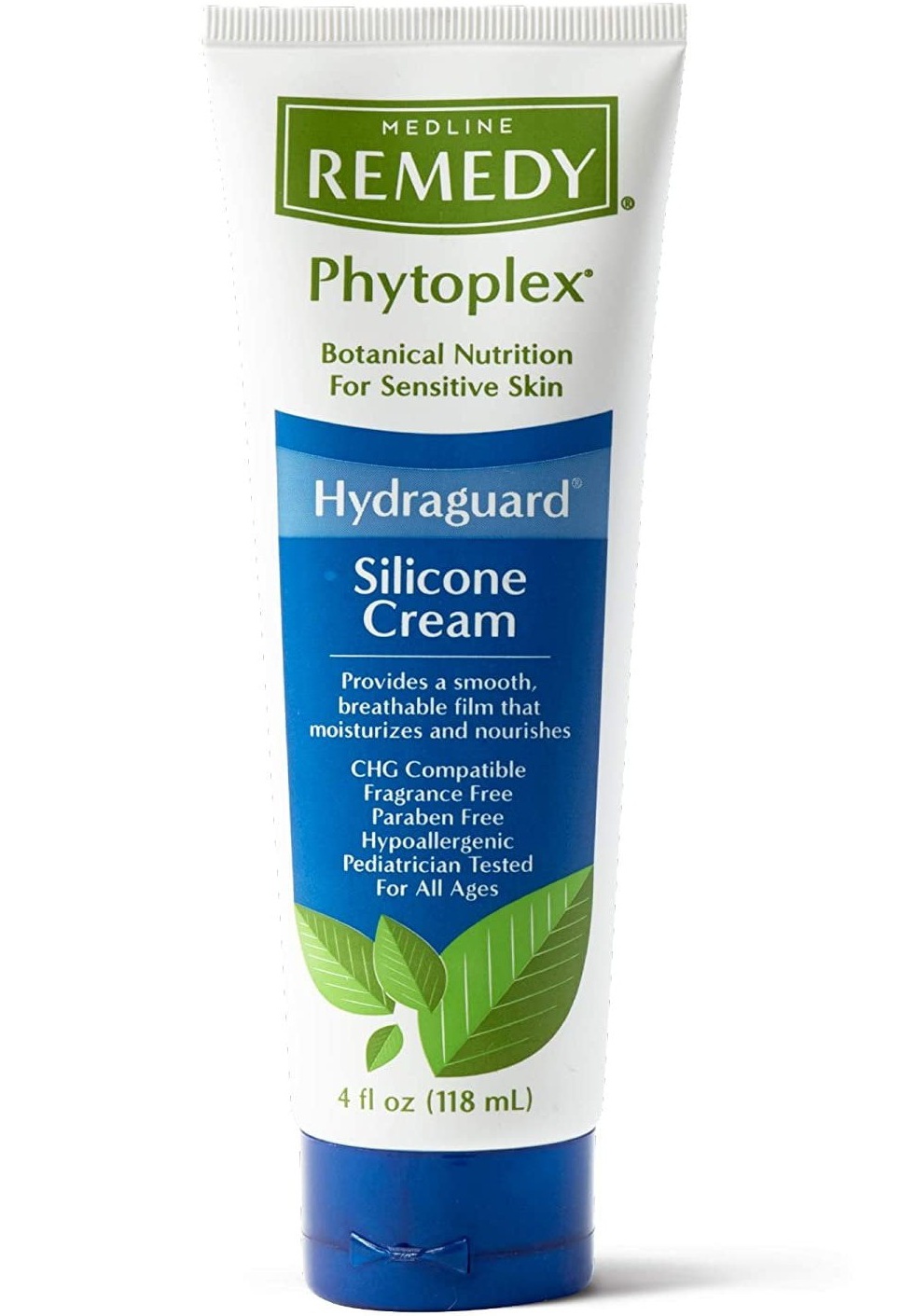
Product identity (name, brand, category) verified against ebay.com ↗
Researched facts on Greenlens always carry the page that stated them — nothing is inferred from a model's memory.
These describe what an ingredient is, not whether it is a problem. The stance marks above are the ratings; these are not.
comedogenic in testingisopropyl myristate
isopropyl myristate: A light emollient, and the ester the rabbit-ear literature names first. Fulton JE Jr, Pay SR, Fulton JE 3rd, "Comedogenicity of current therapeutic products, cosmetics, and ingredients in the rabbit ear", J Am Acad Dermatol 1984;10(1):96-105, PMID 6229554. The openly readable abstract names this ingredient among its "ingredient offenders", in prose and without a numeric rating: "Ingredient offenders include isopropyl myristate and its analogs, such as isopropyl palmitate, isopropyl isostearate, butyl stearate, isostearyl neopentanoate, myristyl myristate..." The rabbit-ear assay rates raw ingredients and does not predict how a finished formula behaves on human skin.
rich occlusivedimethicone
dimethicone: A silicone that forms a film on the surface of the skin without an oily feel. FDA OTC skin protectant monograph, 21 CFR 347.10(g), lists dimethicone as a skin protectant at 1 to 30%.
humectantsodium hyaluronate, glycerin
sodium hyaluronate: A humectant that holds a large amount of water at the skin surface. Chylińska N, Maciejczyk M, "Hyaluronic Acid and Skin: Its Role in Aging and Wound-Healing Processes", Gels 2025;11(4):281, DOI 10.3390/gels11040281, PMID 40277717, open access: hyaluronic acid's "high osmotic activity and anionic structure enable it to bind large amounts of water", and "sodium and potassium hyaluronate are widely used in moisturizing products". The same review notes that high-molecular-weight hyaluronic acid does not penetrate the deeper layers.
glycerin: A humectant, and one of the two ingredients a comparison of moisturiser components found made a significant difference to skin hydration.
Not a verdict — our authorities simply have no reference for these.
FDA OTC skin protectant monograph, 21 CFR 347.10(h), lists glycerin as a skin protectant at 20 to 45%. On the humectant half: Jeong CB, Han JY, Cho JC, Suh KD, Nam GW, "Analysis of electrical property changes of skin by oil-in-water emulsion components", Int J Cosmet Sci 2013;35(4):402-410, DOI 10.1111/ics.12059, PMID 23621673, found that "glycerine and urea showed significant skin hydration effects compared with other humectants".
soothingbisabolol
bisabolol: The main soothing component isolated from chamomile. Eddin LB et al., "Health Benefits, Pharmacological Effects, Molecular Mechanisms, and Therapeutic Potential of alpha-Bisabolol", Nutrients 2022;14(7):1370, DOI 10.3390/nu14071370, PMID 35405982, open access: it "is integrated in many cosmetic formulations due to its skin soothing effects, well documented dermal absorption and the absence of dermal irritations or photosensitivity following its application". The EMA HMPC assessment report on Matricaria recutita (EMA/HMPC/55837/2011) discusses its anti-inflammatory data.