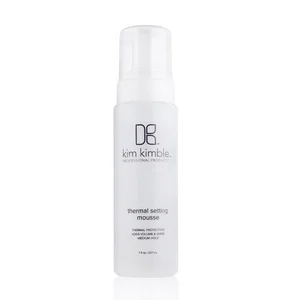
These describe what an ingredient is, not whether it is a problem. The stance marks above are the ratings; these are not.
common irritantDMDM Hydantoin, Methylchloroisothiazolinone, Methylisothiazolinone
DMDM Hydantoin: A preservative the FDA lists as a formaldehyde releaser, which is why formaldehyde-reactive skin can notice it. How much reaches the skin depends on the whole formula, not on this name alone. EU Regulation (EC) 1223/2009, Annex V entry 33, permits DMDM hydantoin as a preservative up to 0,6%. The FDA names it among the "formaldehyde and formaldehyde releasing ingredients" on its Allergens in Cosmetics page (content current 25 February 2022). SCCS Scientific Advice SCCS/1632/21, on the threshold for the "contains formaldehyde" warning, describes a study in which a moisturiser spiked to the 0,6% Annex V maximum released at least 40 ppm formaldehyde. Annex V preamble point 2, as amended by Commission Regulation (EU) 2022/1181, requires the warning "releases formaldehyde" on any product whose total released formaldehyde exceeds 0,001% (10 ppm). That Regulation states the sensitisation ground itself, so the chain is drawn by the regulator and not by us: recital (2) names the class, "Certain of those preservatives are gradually releasing formaldehyde in order to fulfil a preserving function in the final cosmetic product (so called formaldehyde releasers)", and recital (3) gives the purpose of the warning, "In order to inform consumers sensitised to formaldehyde about the presence of formaldehyde that may trigger an allergic reaction". Recital (1) records that formaldehyde is classified a skin sensitizer (Category 1) in Part 3 of Annex VI to Regulation (EC) 1272/2008.
Methylchloroisothiazolinone: A preservative restricted to rinse-off products in the EU because of contact-allergy reports. EU Regulation (EC) 1223/2009, Annex V entry 39 (rinse-off only, 0,0015% of a 3:1 mixture with methylisothiazolinone). The reason is in Commission Regulation (EU) No 1003/2014, recital 3, quoted rather than summarised: "The SCCS concluded that the mixture of Methylchloroisothiazolinone (and) Methylisothiazolinone in a ratio of 3:1 does not pose a risk to the health of the consumer when used as a preservative up to a maximum authorised concentration of 0,0015 % in rinse-off cosmetic products, apart from its skin sensitising potential. The SCCS indicated that induction and elicitation would be less likely in a rinse-off product than when the same concentration is present in a leave-on product." SCCS/1238/09 concludes it "is well recognised as an important skin sensitiser at current conditions of use".
Methylisothiazolinone: A preservative that patch-test clinics see reactions to often enough that the EU banned it from leave-on products. American Contact Dermatitis Society, Allergen of the Year 2013 (Castanedo-Tardana MP, Zug KA, Dermatitis 2013;24(1):2-6); SCCS Opinion on Methylisothiazolinone (P94), Submission II, SENSITISATION ONLY (SCCS/1521/13, revision of 27 March 2014); banned in leave-on cosmetics by Commission Regulation (EU) 2016/1198, which recites the need to address "the increased incidence of allergies induced by methylisothiazolinone".
undeclared fragrance blendFragrance
Fragrance: A blend the label does not itemize, so what is in it cannot be read from the ingredient list. EU Regulation (EC) 1223/2009 permits the collective term "parfum"; the SCCS Opinion on Fragrance Allergens (SCCS/1459/11) reviews the contact-allergy evidence for the substances it can contain.
humectantPanthenol
Panthenol: A provitamin B5 humectant used in products aimed at irritated and healing skin. On the humectant half: Ferreira VTP, Silva GC, Martin AA, Maia Campos PMBG, "Topical dexpanthenol effects on physiological parameters of the stratum corneum by Confocal Raman Microspectroscopy", Skin Res Technol 2023;29(9):e13317, DOI 10.1111/srt.13317, PMID 37753694, PMCID PMC10504581, open access, Introduction: "As a humectant, it has been shown to retain water more efficiently than other humectants during the last stages of dehydration..." On the soothing half, which that paper does NOT support: Cho YS, Kim HO, Woo SM, Lee DH, "Use of Dexpanthenol for Atopic Dermatitis—Benefits and Recommendations Based on Current Evidence", J Clin Med 2022;11(14):3943, DOI 10.3390/jcm11143943, PMID 35887707, open access, section 3.5: "To facilitate wound healing, dexpanthenol reduces inflammation, and promotes cell proliferation and epithelial remodeling."
soothingPanthenol
Panthenol: A provitamin B5 humectant used in products aimed at irritated and healing skin. On the humectant half: Ferreira VTP, Silva GC, Martin AA, Maia Campos PMBG, "Topical dexpanthenol effects on physiological parameters of the stratum corneum by Confocal Raman Microspectroscopy", Skin Res Technol 2023;29(9):e13317, DOI 10.1111/srt.13317, PMID 37753694, PMCID PMC10504581, open access, Introduction: "As a humectant, it has been shown to retain water more efficiently than other humectants during the last stages of dehydration..." On the soothing half, which that paper does NOT support: Cho YS, Kim HO, Woo SM, Lee DH, "Use of Dexpanthenol for Atopic Dermatitis—Benefits and Recommendations Based on Current Evidence", J Clin Med 2022;11(14):3943, DOI 10.3390/jcm11143943, PMID 35887707, open access, section 3.5: "To facilitate wound healing, dexpanthenol reduces inflammation, and promotes cell proliferation and epithelial remodeling."